

Word Solitaire-Unscramble Puz
Mindful Daily Puzzles
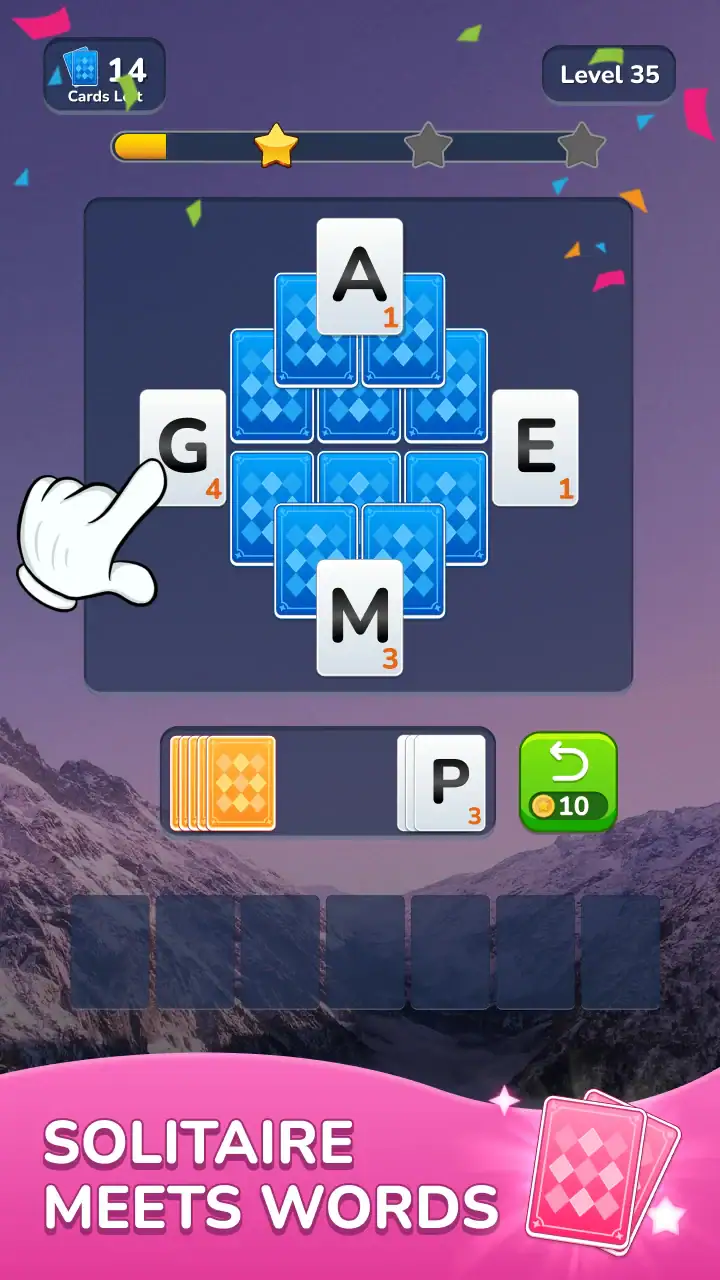
I approached Word Solitaire-Unscramble Puz as the kind of game I could open for a few quiet minutes rather than as a title demanding a long session. It combines word-solving with solitaire, so the appeal is split between finding language patterns and making card-style decisions. That combination gives it a calmer rhythm than a typical timed word game, while still asking me to think before every move.
The game is free to start, rated for Everyone, and comes from Mindful Daily Puzzles. Its store summary presents it as a way to exercise the brain and relax, but I think the more useful question is whether that particular mix suits your habits. If you enjoy rearranging letters and also like the gradual choices of solitaire, it has a clear identity. If you want a pure crossword, a competitive word battle, or a traditional card table, another category may serve you better.
How I Would Decide Whether It Fits
The central choice: words, cards, or a blend?
My first test for any puzzle game is whether its main action remains enjoyable after the novelty fades. Here, the important decision is not simply whether you like words. You need to be comfortable moving between two types of attention: spotting possible words and managing a solitaire-like layout. That makes the game more varied than a basic anagram board, but it also means it may feel less focused than a dedicated word puzzle.
I would recommend trying it if you like puzzles that let you pause between decisions. The solitaire structure naturally creates moments where I can inspect the available options instead of rushing to type the first answer that comes to mind. That makes it suitable for a short break, a quiet commute, or a wind-down routine when I want some mental activity without the pressure of a leaderboard.
On the other hand, people who measure enjoyment by speed may find the blend a little restrained. A fast word scramble gives immediate feedback and a traditional solitaire game offers familiar card logic. This title sits between those experiences. Its value comes from the combination, not from being the deepest possible version of either one.
Related News






What I look for during a short session
For everyday use, I would judge the game by three practical questions. Can I understand the current puzzle without a long tutorial? Can I stop after a few minutes without feeling that I have lost my place? And does each move give me a reason to think rather than merely tap through obvious choices? Those are more important to me than a large feature list because they determine whether the game becomes a habit.
The word-and-solitaire format has a useful advantage here: it gives my attention two ways to stay engaged. When I am tired of searching for a word, I can focus on the card arrangement. When the card decision feels routine, the letters bring the mental challenge back. That change of focus is one of the less obvious reasons this game may work well as a break-time activity.
I would not choose it as a serious vocabulary course. Solving words can keep language active, but casual puzzle play is not the same as structured learning. Someone looking for definitions, pronunciation practice, or a planned language curriculum should use an educational app instead and treat this game as entertainment.
Gallery
Who is most likely to enjoy it?
The best match is a player who already enjoys relaxed word games but wants more variety than repeatedly filling a grid. It also suits solitaire fans who like the idea of adding a language layer to familiar card decisions. Because the content rating is Everyone, it is positioned as an accessible choice for a broad audience, although individual comfort with reading and word difficulty will naturally vary.
I can also see it working for people who avoid highly social games. There is no need to coordinate with friends in order to get value from a session. You can play privately, stop when you want, and return later without turning a small break into a commitment. That makes the game easier to fit around chores, waiting rooms, or the final few minutes before bed.
Where the combination feels strongest
The strongest part of the design is the way the two puzzle traditions can balance each other. A pure anagram game can become repetitive when every round asks for the same kind of mental search. A standard solitaire app can become automatic once the card patterns are familiar. By placing them together, the game has more opportunities to interrupt that autopilot feeling.
That does not mean every player will experience the blend as equally satisfying. I prefer it when I want gentle concentration, but I would choose a dedicated word game when I want to test vocabulary or solve a dense clue. I would choose a classic solitaire app when I want the calm, predictable card routine. The winning situation for this title is the middle ground: I want a mental break with enough variation to keep it from becoming background tapping.
A useful personal rule is to decide what kind of session I want before opening it. If I want to relax, I give myself permission to play slowly and consider the layout. If I want sharper stimulation, I focus on finding efficient word solutions rather than trying to finish quickly. That small change in approach helps the same game feel different without pretending it offers separate modes that are not confirmed.
How It Compares, What It Costs, and My Recommendation
Where this game has an advantage over familiar alternatives
Compared with a basic word scramble, Word Solitaire-Unscramble Puz has a more layered decision process. I am not only asking which letters can form a word; I am also considering how the current card arrangement affects what may become available next. That extra layer can make a short session feel more deliberate and less like a reflex test.
Compared with a conventional solitaire app, the word element gives me a reason to remain mentally alert. A familiar card sequence can become soothing but predictable. Here, language recognition adds a second kind of problem, which is useful when I want relaxation that still feels active. This is the clearest reason I would suggest it to someone who says ordinary solitaire is too repetitive.
Compared with crossword and clue-based games, it appears better suited to players who prefer manipulating letters over interpreting long clues. That distinction matters. Crossword fans often enjoy cultural references, definitions, and a larger grid of connected answers. This game is a better fit when I want compact word decisions linked to a card-style flow rather than a full puzzle page.
Compared with competitive word games, its appeal is less about proving that I am faster or more knowledgeable than another player. That can be a benefit for anyone who finds timers and rankings tiring. It is also a limitation for people who need social pressure to stay interested. If competition is the main reason you play, a multiplayer word title will probably give you a stronger sense of purpose.
Small habits that make sessions more enjoyable
My first practical tip is not to treat every available move as equally urgent. In a combined puzzle, the most obvious word may not be the most useful choice if another move preserves more possibilities. I try to scan the whole visible situation before committing, especially when I am playing slowly. That turns the game from simple recognition into a modest planning exercise.
My second tip is to use it as a transition activity rather than an endless distraction. A short session after work can help me change mental gears, while opening it whenever I am avoiding an important task can have the opposite effect. Because the game is easy to approach, I would set a natural stopping point before playing if I need to protect my time.
My third tip is to notice which half of the design is actually keeping me engaged. If I consistently enjoy the letter solving but ignore the card decisions, a focused word app may be a better long-term choice. If the card flow is what relaxes me and the word layer feels like an interruption, a traditional solitaire game may be more satisfying. The hybrid format is useful only when both sides contribute to the experience.
A fourth consideration is screen context. I would play it when I can give the puzzle at least a little attention, not while walking or handling something else. The appeal depends on seeing relationships between letters and cards, so distracted tapping weakens the part that makes the game different from other casual time-fillers.
Practical details before installing
The game is free, which makes it easy to test without committing money at the start. It does include in-app purchases ranging from $0.99 to $49.99 per item, so I would check the purchase flow carefully before handing the phone to a child or allowing unrestricted buying. The Everyone rating makes it broadly approachable, but the presence of optional spending is still a practical detail worth considering in a family setting.
Its current version is 1.83.1, and it supports devices running Android 7.1 or later. That gives owners of older compatible Android phones a reason to check it before assuming they need newer hardware. I would still make sure the device has enough free space and that the operating system meets the requirement before troubleshooting an installation problem.
The game has passed the early discovery stage with a 4.8 average from around 3.6 thousand ratings and more than 100 thousand installs. I read that as evidence of strong interest, not as a guarantee that every player will enjoy the hybrid format. The number of ratings can tell me that many people chose to respond, but my own decision would still depend on whether I want a calm blend rather than a specialized puzzle experience.
Mindful Daily Puzzles released it on September 24, 2024, and the developer name gives the product a clear puzzle-focused identity. I would expect the experience to appeal most to people who want a repeatable daily-style mental break, although I would not confuse that positioning with a formal brain-training program or a measurable learning plan.
When I would skip it
I would skip this game if my main goal were advanced solitaire strategy. The word layer changes the nature of the activity, so players seeking the cleanest possible card challenge may prefer a dedicated solitaire title. I would also skip it if I wanted detailed vocabulary expansion, because word discovery alone does not replace lessons, definitions, or deliberate review.
I would be cautious about recommending it to someone who dislikes mixed mechanics. Some players want a game to do one thing exceptionally well. For them, the transition between letter solving and card decisions may feel like friction instead of variety. The same feature I see as a strength can become a distraction when a player has a very specific puzzle preference.
I would also look elsewhere if social competition, chat, or shared challenges are essential. This review is based on the core word-solitaire identity, and that is where the game makes its case. It is not the choice I would make for a group activity or a competitive word-match night.
My final recommendation
I recommend Word Solitaire-Unscramble Puz to anyone who wants a free, low-pressure puzzle that combines letter play with solitaire decisions. I especially like it for short breaks when I want to relax without switching my brain off completely. The format gives it more texture than a plain word scramble and more mental variety than routine card play.
My recommendation is more qualified for specialists. Choose a crossword-style game for clues and richer vocabulary context, a competitive word game for pressure and social comparison, or a traditional solitaire app for pure card logic. Choose this one when the attraction is specifically the overlap: words to solve, cards to consider, and a pace that leaves room to think.
For a realistic everyday scenario, I would open it while waiting for an appointment, play one focused stretch, and stop before the break turns into an hour of aimless scrolling. I would keep purchases protected on a shared device, confirm Android compatibility, and decide beforehand whether I am playing for relaxation or challenge. Those small boundaries make the experience more useful.
My bottom line is simple: this is a worthwhile choice when variety and calm matter more than specialization. Its strongest quality is the unusual pairing of word puzzles and solitaire; its main weakness is that players who want only one of those things may find the other half gets in the way. If that trade-off sounds appealing, the free entry point makes it easy to give the game a fair try.
FAQs for Word Solitaire-Unscramble Puz
What is Word Solitaire-Unscramble Puz, and how is it played?
Word Solitaire-Unscramble Puz combines classic solitaire-style card mechanics with word puzzles. You arrange or clear cards while unscrambling letters to form valid words and complete each level. The gameplay is generally easy to understand, but later stages introduce more challenging word combinations, limited moves, and strategic decisions that require both vocabulary and careful planning.
Is Word Solitaire-Unscramble Puz free to download and play?
The game can typically be downloaded for free, allowing players to access its main puzzle experience without an upfront purchase. However, free versions may include advertisements, optional in-app purchases, or paid items that provide hints, extra moves, or other conveniences. Before downloading, check the current store listing for pricing, subscriptions, and purchase details.
Can I play Word Solitaire-Unscramble Puz without an internet connection?
Some parts of Word Solitaire-Unscramble Puz may remain available offline, especially previously loaded single-player levels. Nevertheless, an internet connection can be required for advertisements, rewards, cloud synchronization, updates, events, or in-app purchases. Offline availability may also vary between Android and iOS versions, so users who travel should test the game before relying on it without mobile data.
Is Word Solitaire-Unscramble Puz suitable for children and casual players?
The game is generally suitable for casual players who enjoy vocabulary challenges, card puzzles, and short sessions. Its basic mechanics are accessible, although difficult levels may require a broad English vocabulary and patience. Parents should review the age rating, advertising content, privacy information, and in-app purchase settings before allowing younger children to play without supervision.
Does Word Solitaire-Unscramble Puz include hints, rewards, or in-app purchases?
Word Solitaire-Unscramble Puz may offer hints, bonus coins, extra attempts, daily rewards, or other assistance systems to help players progress through difficult puzzles. These features can often be earned by playing or obtained through optional purchases. Because the available offers may change with updates, review the in-game shop and device purchase settings to avoid accidental spending.
Pros
- Combines solitaire and word puzzles for varied gameplay.
- Simple rules make it easy to start without a lengthy tutorial.
- Short rounds work well for quick breaks or casual play.
- Word challenges can help exercise spelling and vocabulary skills.
- Offline play may be convenient when you have limited connectivity.
Cons
- Difficulty can vary sharply between levels or word puzzles.
- Repeated card and word layouts may become predictable over time.
- Some puzzles may depend heavily on familiarity with English words.
- Hints or extra moves may be limited unless you watch ads or pay.
- The experience may feel less engaging for players seeking deep strategy.


